One by one, the films you’ve all been waiting for are starting to reveal themselves, and this year’s festival is slowly coming into focus.
This issue is packed with exciting news from the 31st BIFF’s Opening Film to the recipient of the Korean Cinema Award, plus the newly selected projects for the ACF Co-Production Support Fund! And that’s not all, we’ve also interviewed two of our programmers for an inside look at this year’s Festival lineup.
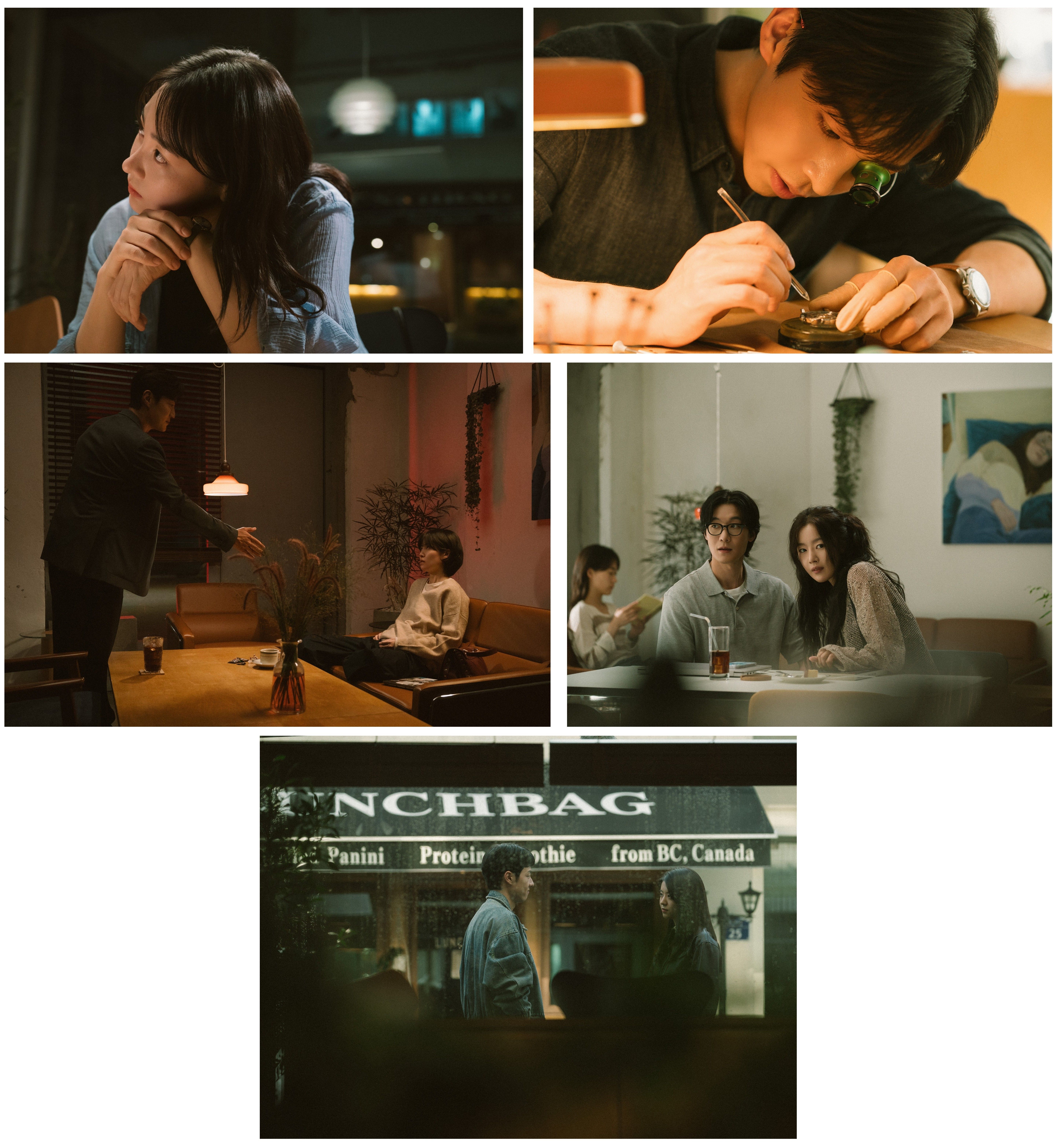
The film that will open the 31st BIFF has been announced: director Kim Jong-kwan’s The Table: Day and Night!
Since his award-winning debut short How to Operate a Polaroid Camera (2004), Kim has built a singular cinematic world through delicate, deeply human storytelling, from Worst Woman (2016) and The Table (2017) to Josée (2020) and The Killers (2024), earning acclaim from audiences and critics.
The Table: Day and Night follows four couples across four distinct love stories, all set within a single cafe. Each story is carried by a youthful energy and understated emotional depth that’s become Kim’s trademark.
The film brings together a powerful cast including this year's Opening Ceremony host Kim Minha, alongside Joo Jong-hyuk, Han Sun-hwa, Chang Ryul, Shim Eun-kyung, Lee Hee-jun, Jeon So-young, and Kim Dong-hwi, building even more anticipation for the big night 🎊
Get ready to witness the first scene of this year's BIFF!
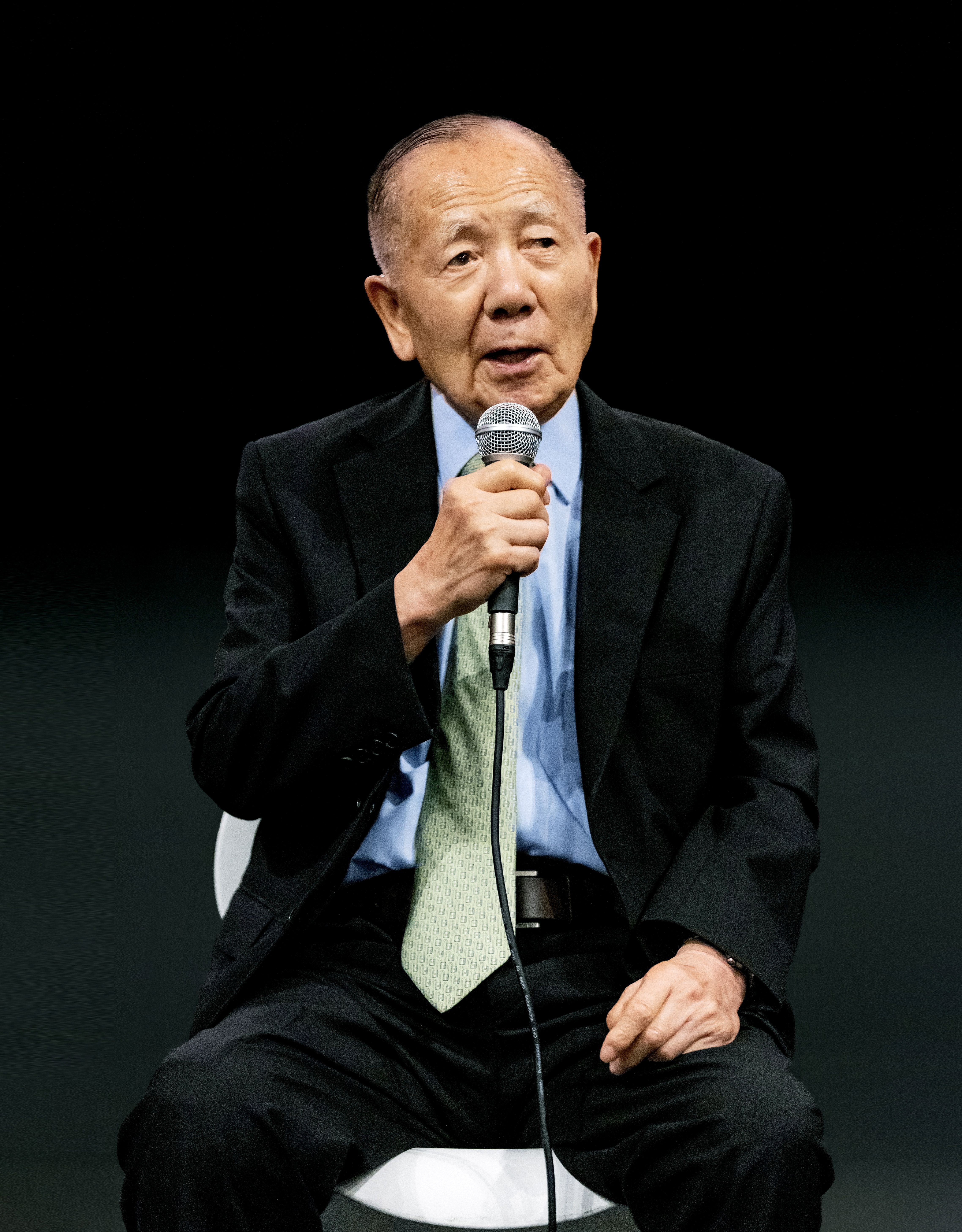
BIFF founding festival director Kim Dong-ho has been named the recipient of this year's Korean Cinema Award! The Korean Cinema Award honors film figures who've made exceptional contributions to Korean cinema and its global standing.
As BIFF's founding director from 1996 to 2010, Kim drove the Festival’s successful launch with unwavering determination. His leadership played a decisive role in earning the trust of filmmakers worldwide and establishing BIFF as the heart of Asia’s film network.
Kim's passion for Korean cinema hasn't slowed down even after stepping down— nurturing future talent, developing cultural policy, serving as a juror at film festivals around the world, all while bridging Korean and Asian cinema with the international film community. And in 2025, he made his directorial debut with Mr. Kim Goes to Cinema!
He'll receive the award at the Opening Ceremony on October 6, a well-deserved, full-circle moment that promises to make this year's opening night even more special. 🌟
The Asian Cinema Fund (ACF), operated by Asian Contents & Film Market (ACFM), has announced its three selections for the 2026 Co-Production Support Fund!
Launched in 2025 to promote international co-productions, the fund received 15 submissions this year and expanded its support from one project last year to three: Grateful, Rhizome, and TRINITY.
The three projects bring together an impressive 13 countries, including Korea, Japan, France, Laos, Singapore, and Taiwan, highlighting the growing scale of cross-border collaboration 🌏
Stay tuned as these three projects cross borders to bring new cinematic possibilities to life!
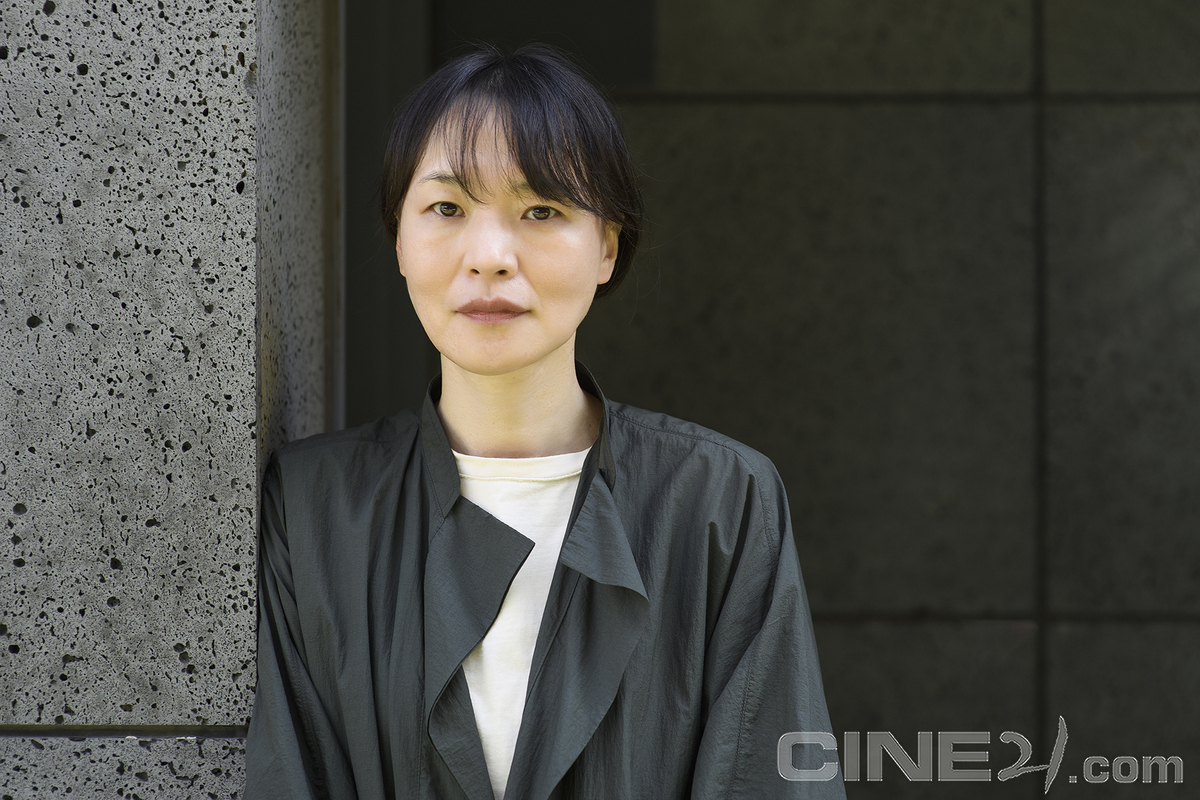
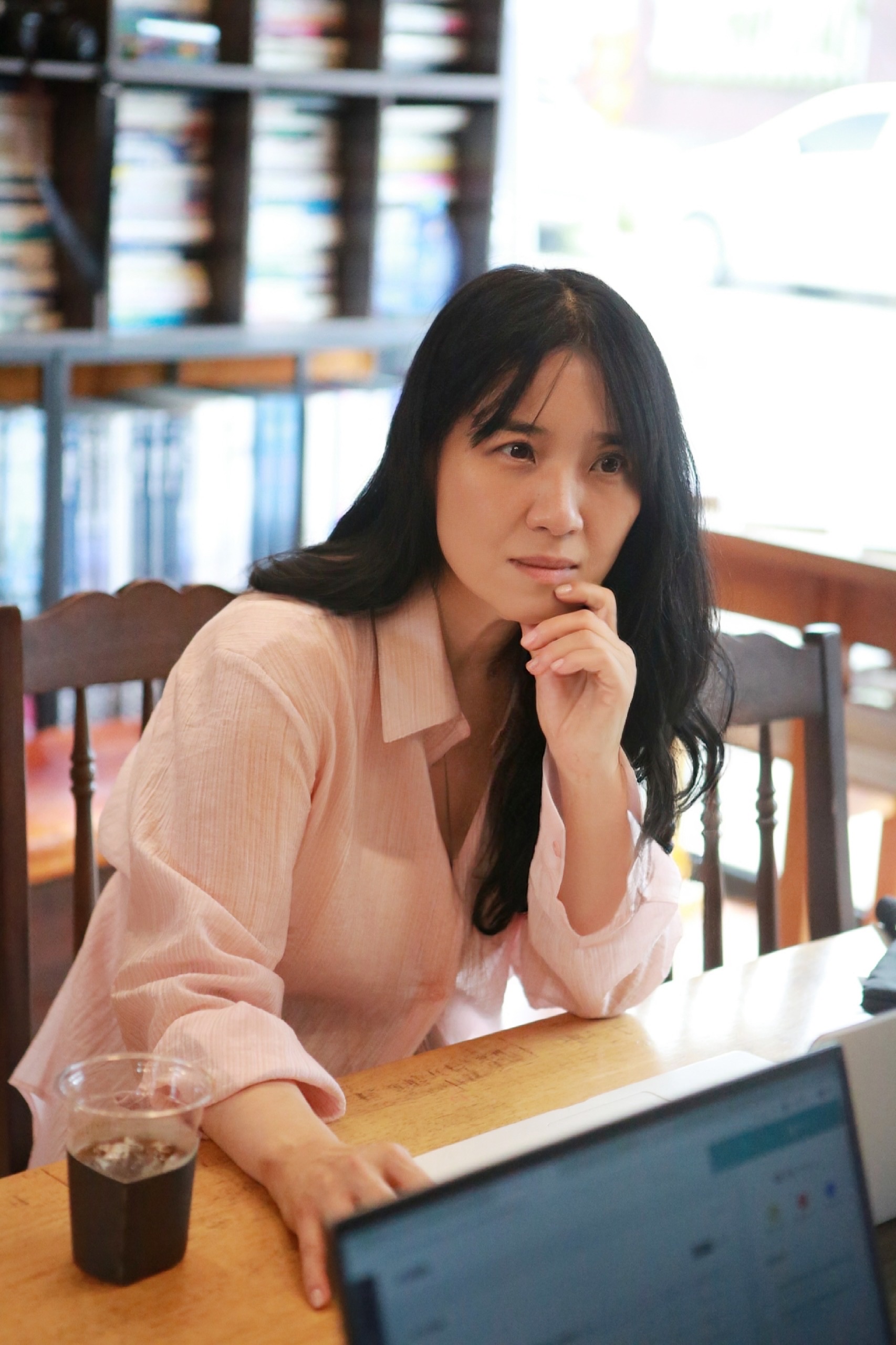
Interview I Programmer, KANG Sowon🎙️
(Photo Credit: Cine21)
Q To start, could you introduce yourself to our readers?
I’m Kang Sowon, a programmer of the Wide Angle section, where I oversee Korean and Asian documentaries and Korean Short Film Competition.
Q What do you think makes documentaries such a compelling genre?
If I had to sum it up in one phrase, it would be “the power of reality.” Watching as many films as I do, there are moments when it all feels like too much. But somehow, I can keep going without getting worn out, since it’s documentary rather than fiction. Documentary deals with real spaces, real events, real people, and because of that, I believe there’s no such thing as a documentary not worth watching. Even a poorly made one still has something to say. What’s rare in fiction but not uncommon in documentaries is that sense of connection: this world meeting that world, or crossing paths with someone you’d otherwise never encounter in your lifetime. That raw sense of reality is what I believe beats any fiction.
Q As a programmer covering Asia and Korean documentaries, what recent trends have you noticed?
The clearest impression I’ve gotten from Korean documentaries this year is generational change. A new wave of filmmakers is coming through who are relatively unburdened by the conventional idea of what a documentary should be. For them, documentary is a deeply personal form of expression, a medium for self-discovery. I expect that shift to come through in this year’s Korean Documentary Competition and showcase lineup.
I’m seeing a similar, though slightly different, shift in Asian documentaries. What stands out is how large political, social, and historical issues are increasingly being told through a personal, first-person lens. Another notable trend is that the list of countries attached to each film keeps getting longer and more complicated. With European and North American capital flowing into Asian documentary production, the competition between BIFF and Western festivals over multinational Asian documentaries is only intensifying.
Q Is there a film you'd recommend to audiences who have supported BIFF over the years?
Rather than a recommendation, there is one film I’m most eager to watch right now, Christopher Nolan’s The Odyssey. Honestly, I envy anyone who gets to watch it in IMAX. I have a feeling that if you catch this monumental mainstream release first, then come to BIFF and seek out Asian films you’d rarely encounter in a regular theater, you’ll really understand what a film festival is all about.
Q What's the most rewarding part of preparing for the Festival?
It’s when I can feel the air in the theater shift because the audience is fully absorbed in the film. It’s hearing a sharp, thoughtful question from an audience who clearly loves cinema. It’s that moment of quiet confirmation that I made the right decision. Each of those moments feels like a small light switching on somewhere in my heart.
Q Finally, do you have a message for everyone who will be joining us in Busan this October?
I know you’ll be coming to Busan with a packed schedule this year too, but if you find yourself without a ticket or with some time to spare, I highly recommend stopping by the BIFF Forum. It’s a chance to hear the industry’s hottest current issues straight from the people in the field. It runs October 8 (Thu) through 11 (Sun) at the Busan Film & Audiovisual Industry Center, and it’s free!
Interview I Programmer, JUNG Mi🎙️
Q To start, could you introduce yourself to our readers?
Thank you for scrolling all the way down here. Hello, I’m Jung Mi. I’m sure many of you already know that BIFF launched Community BIFF in 2018, and BIFF Everywhere in 2021. Community BIFF is an audience-driven event running over four days, Thursday through Sunday of the Festival’s first week, in Nampo-dong. BIFF Everywhere runs throughout the entire Festival period at venues across Busan and beyond.Put the two together, the scale rivals that of a full-fledged film festival in its own right. I'm the programmer who launched both and has overseen them ever since.
Q If you had to describe Community BIFF and BIFF Everywhere in a single phrase, what comes to mind?
Beyond the theaters where films are screened, a film festival also has its markets, its plazas, and its carnivals. If ACFM is the marketplace of the Festival, then Community BIFF and BIFF Everywhere are the playground for the plaza and the carnival. Play is more fun when it’s spontaneous, and even more so when it’s shared. Audiences can take an active part in planning and running the programs themselves, even pitching in the marketing. What makes this possible is that BIFF’s foundation has always been its audience and the city of Busan itself.
Rooted in its audiences, Community BIFF is a journey through time and something of an all-in-one package, powered by some of the world’s most creative and fun-loving film fans. Branding the wider Busan-Ulsan-Gyeongnam region, BIFF Everywhere presents a free cultural experience as a journey through space, where life and the world stretch outward across the planet Earth.
Q What is your first memory of BIFF? What stands out when you look back on it?
Thirty years ago, at the very first edition of the Festival, I worked as a World Cinema coordinator. Every evening, I’d take the shuttle boat from Nampo-dong in Jung-gu across to the outdoor screenings at the Haeundae Yacht Center, watching audiences light up with excitement. I remember thinking that this natural mingling between filmmakers and citizens was exactly what had driven Busan to become the heart of Asian cinema. That spectacle of Busan stayed with me so vividly that, I found myself longing for a festival built around these kinds of spaces; a plaza alive with people trading stories and cheering each other on; a carnival where you’d sit in an alley, sharing drinks and enjoying a loose sense of comradeship; and a private chamber where you could sit with a film’s unflinching mirror of truth and completely lose yourself in it. I wanted a festival where people could move freely between all three. Walking, reading, dreaming and simply enjoying themselves along the way.
Q What qualities do you look for in a film?
Originality, something that’s truly its own. Urgency, freshness, and depth all matter, and if a film manages to achieve that seamless quality where none of the calculation shows, all the better. I try to keep the people behind the film at the center, think carefully about the right moment to bring their work to Busan, and capture them at their most shining. Beyond timeliness, I also consider the overall balance of the lineup, and I look for films capable of generating real value and discourse. I hope you’ll discover plenty of films in Busan where you can feel the filmmaker’s own style, voice, mood, and vision — films that linger with you and spark your imagination.
Q Is there a film you'd recommend to audiences who have supported BIFF over the years?
I recommend films that push you to act, whether that's picking up a journal or a book, and that expand the world of whoever's watching. Films did exactly that to me. My first trip abroad was to the Hong Kong International Film Festival in March 1997, following the late Kim Ji-seok. Of the festival staff who traveled with me, only one other person and I stayed on to keep traveling after the festival. Having worked at the theater that released Chungking Express and Fallen Angels, I set out to track down every filming location I could remember. Back at Jongno Theater, my very first job, the first films I ever screened for our members as a new employee were by Agnès Varda and Krzysztof Kieślowski — almost everything either of them made is worth seeing. I'd also recommend picking up the original novels by Carl Sagan and Philip K. Dick and bringing them along to this year's Community BIFF screenings of the science fiction films based on their work.
Q Finally, do you have a message for everyone who will be joining us in Busan this October?
I learned the phrase 도광양회(韜光養晦), meaning to hide one’s talent and quietly build strength while waiting for the right moment, from actor Park Jung-min, who visited Community BIFF last year. I hope that, for so many of you carrying real potential, a trip to Busan can become exactly that kind of momentum. It's by staying open to new attempts and new experiences that we grow into who we're meant to become. Busan will be here like an old friend — a port where we plant new seeds together each year and wait for them to bear fruit, knowing that sometimes the journey itself is the most beautiful part.
(Special thanks to Hong Eun-young, Executive Director of the Seoul International Whistler Film Festival, for capturing me at work!)
BIFF Quiz🧩
Q Which of the following awards is NOT presented at the Opening Ceremony?
① The Asian Filmmaker of the Year
② Korean Cinema Award
③ Camellia Award
④ BIFF Cinema Master Honorary Award
⑤ Busan Cinephile Award
Q Busan Cinema Center is the hub of BIFF, offering everything from art-house cinema to live performances. As we prepare for the 31st BIFF this October, the venue is also known by its native Korean name, 'Dureraum', a combination of Dure and Raum. What does the word ‘Dure’ actually mean?
① A Silver lining
② New, Fresh, Visionary
③ Fun, Joy, Excitement
④ A vibrant gathering
⑤ Ocean waves
👀 Answers to Last Issue’s BIFF Trivia
Q When did Michelle Yeoh, this year's recipient of 'The Asian Filmmaker of the Year,' first visit Busan?
① 2002 – Pusan Promotion Plan (now the Asian Project Market)
② 2007 – Far North
③ 2010 – Reign of Assassins
④ 2011 – The Lady
① Michelle Yeoh’s connection to BIFF began in 2002, when she attended the Pusan Promotion Plan (now the Asian Project Market.) She has returned to Busan many times since, with standout films including Far North (2007), Reign of Assassins (2010), The Lady (2011), Master Z: The Ip Man Legacy (2018), which is the Closing Film of the 23rd BIFF, and Everything Everywhere All at Once (2022).
Q Which award was established to celebrate the artistic and cultural contributions of pioneering women in film? This year, the honor goes to director Ann Hui!
(Hint: It shares its name with Busan's official flower — and it was also the favorite flower of Gabrielle Chanel, founder of CHANEL)
① Sonje Award
② Korean Cinema Award
③ Camellia Award
④ BIFF Cinema Master Honorary Award
③ Camellia Award was established 2024, named after the camellia, Busan’s official flower. And it was also the favorite flower of CHANEL founder, Gabrielle Chanel!