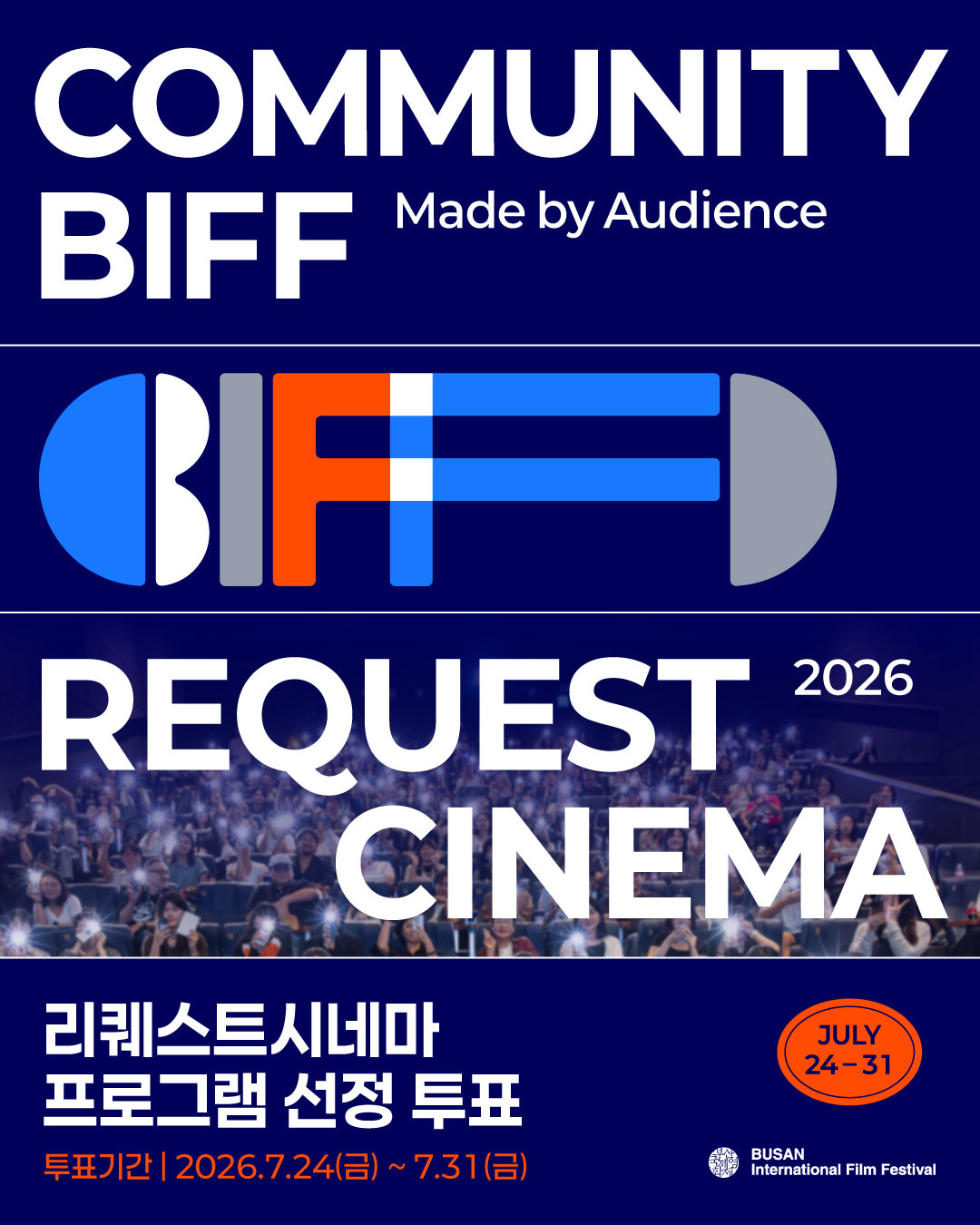
Community BIFF’s signature audience-driven program, Request Cinema: Made by Audience, is now officially open for voting! From film curation to event planning, it gives festivalgoers the chance to experience festival programming firsthand.
This year set a new record with 92 submissions — from immersive programs and special guest sessions to live concert screenings, the submissions are packed with creative ideas and fresh perspectives.
Visit Parti Townhall, and cast your vote and see the programs come to life on stage at this year’s Festival! Voting opened on July 24 (Fri) and closes at 3:00 pm KST on July 31(Fri). Don’t miss the chance to have your say on this year’s Request Cinema lineup!
Asian Project Market (APM) Announces 30 Official Selections!
The 2026 Asian Project Market (APM) has announced a lineup of 30 film projects. For the third consecutive year, the APM received a record number of submissions reflecting the global film industry’s soaring enthusiasm for Asian cinema.
Each year APM discovers fresh feature film projects ranging from big-scale commercial ones to low-budget indies to link them with global film investors, producers, and distributors. APM offers filmmakers opportunities to meet international leading film industry professionals.
This year’s official selection brings together projects from 20 countries, spanning an incredible range of genres: courtroom dramas, coming-of-age stories, crime thrillers, queer romantic comedies, dark comedies, and mystery thrillers.
At their core, these selections dive deep into pressing local realities, deeply personal journeys, community ethics, and family dynamics. The lineup is as diverse in talent as it is in story, featuring everything from bold feature debuts by emerging directors to high-profile new projects from international festival favorites.
See the full lineup and discover the stories these projects have to tell!👇
Q To start, could you introduce yourself to our readers?
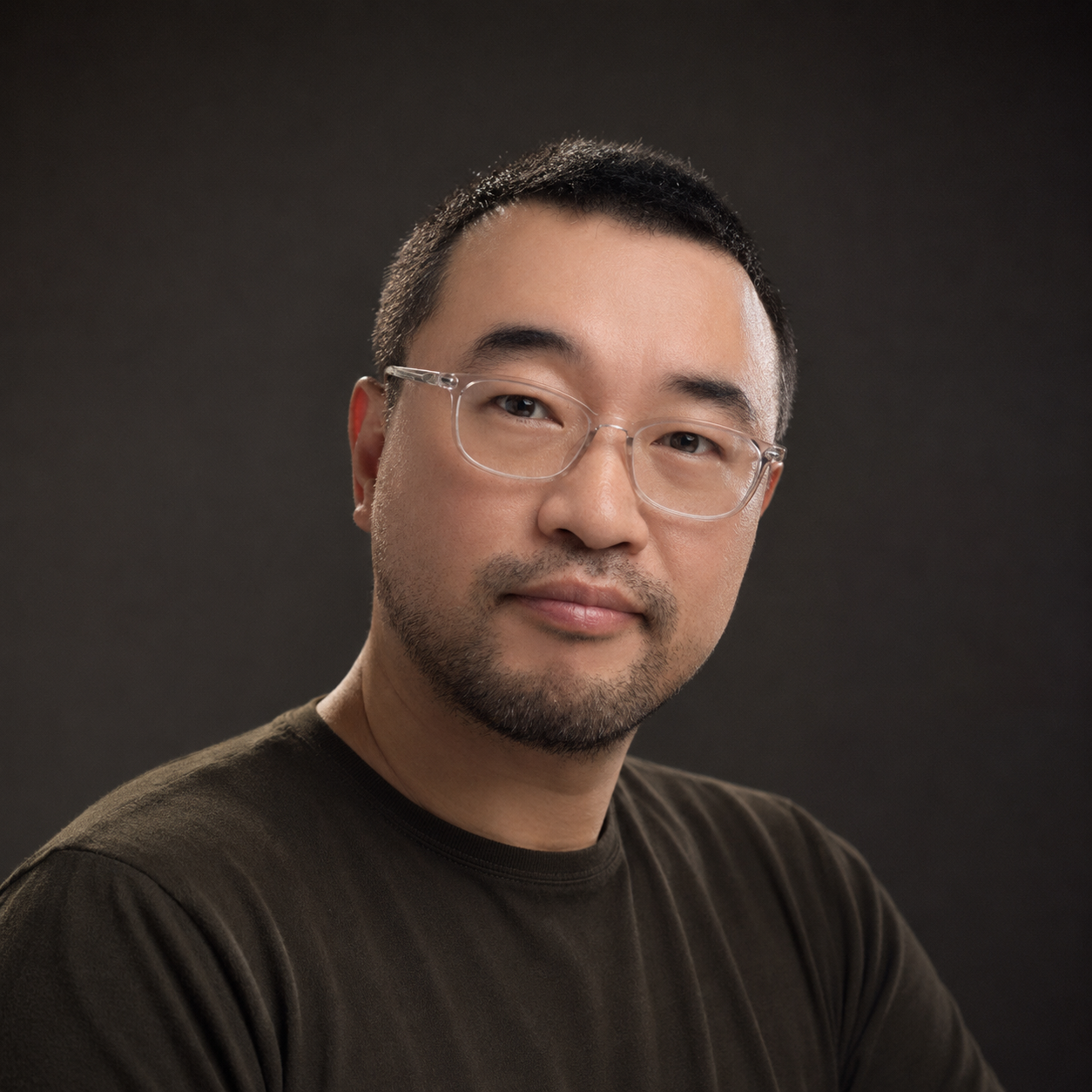
Hello, everyone! I'm Park Sungho, a programmer at BIFF where I oversee films from Southeast and West Asia, and Latin America, as well as the Asian Short Film Competition. I am also the head of the CHANEL X BIFF Asian Film Academy. Over the years, I've had the pleasure of meeting many of you through GVs (Guest Visits),
and every time, I can never quite put into words how grateful I am for your continued support. It's hard to believe we're already just 68 days away from this year's BIFF. I’ve been working hard to make this year’s edition another memorable one, and I can't wait to welcome you all back to Busan this October.
Q As a member of BIFF's selection committee, are there any new trends or exciting developments in Southeast Asia, West Asia, and Latin America that you've noticed recently?
I'd sum it up as ‘from the margins to the center.’ Across all the regions I cover, locally produced films are gaining market share, while international co-productions are becoming increasingly active. In Southeast Asia, horror films have firmly established themselves as a mainstream genre, while filmmakers are also producing a wide range of works that engage with social and historical issues. In West Asia, countries such as Qatar and Saudi Arabia are seeing remarkable growth, driven by strong investment and support for the film industry. Meanwhile, Latin America continues to introduce a new generation of filmmakers whose bold, experimental voices are making an impact on cinema.
Q Is there a key change for the 2026 CHANEL X BIFF Asian Film Academy?
‘Asian Film Academy,’ established in 2005 and relaunched in 2022 as the ‘CHANEL X BIFF Asian Film Academy’ through our partnership with the global luxury brand CHANEL, continues to nurture emerging filmmakers from across Asia under the guidance of acclaimed directors and mentors. This year director Shin Su-won has been appointed as the program’s first female Dean. Meanwhile, 2007 alumnus Yosep Anggi Noen returns as Directing Mentor. We have also made a major change to the curriculum, shifting from short film production workshops to ‘Proof-of-Concept’ pilot production giving fellows a stronger foundation in developing their debut features, and we’re looking forward to seeing the practical impact of this new approach.
Q What qualities do you look for in a film?
Every year, we have films from all over the world that reflect an incredible range of genres, styles, and perspectives. Every single one has its own merits, but of course it's impossible to feature them all at the festival. For me, the most important thing is finding the right balance within the program. I often think of it as a chef preparing a feast. You want every flavor to be there—something sweet, savory, tangy, and spicy. And even if there's a film that's a little more bitter or challenging, if it's something audiences can only experience at BIFF, then I believe it deserves a place on the menu.
Q What's the most rewarding part of preparing for the Festival?
It's always deeply moving to watch the end credits roll. There's something magical about that moment when we return to reality after a long dreamlike journey of cinema. I'd like to express my heartfelt gratitude to everyone who shares that moment with us.
Q Finally, do you have a message for everyone who will be joining us in Busan this October?
This year at BIFF, I'd really encourage you to take a chance on something new. Pick a film from a country you know little about, or from a filmmaker you are not familiar with. That's where the magic of a film festival comes from. Stepping outside your comfort zone can lead you to stories, cultures, and voices you never expected to connect with. I hope you'll discover a film that opens up a whole new world for you and maybe even find a new favorite along the way.
Interview I Programmer, SEO Seunghee 🎙️
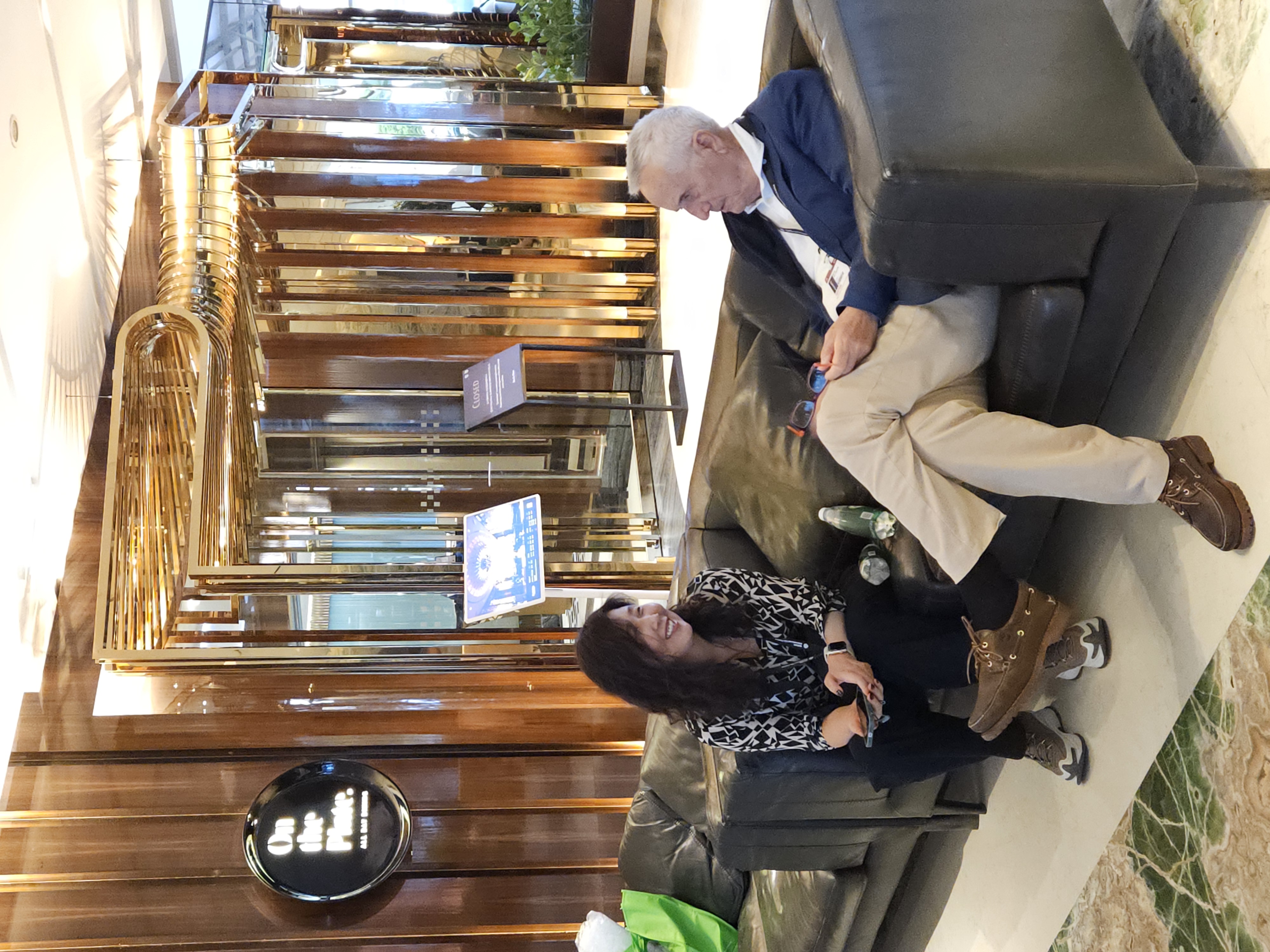
[Photo] (Left) Programmer Seo Seunghee, (Right) Marco Bellocchio
Q To start, could you introduce yourself to our readers?
Hello, readers! My name is Seo Seunghee, and I’m a programmer at BIFF where I cover European and African cinema.
Q You recently visited many film festivals across Europe. Did you spot any compelling new trends in European cinema?
If I had to summarize European cinema this year in a single phrase, it would be ‘dissolving borders and reimagining community.’ In particular, the 2026 Cannes Film Festival brought this vision into sharp focus.
First of all, I would like to mention 'the rise of transnational cinema.' A filmmaker’s nationality is no longer the defining factor in how we understand a film. Contemporary European cinema prioritizes the film’s unique perspective over its country of origin. Cross-border collaboration has already become the standard of film production and Cristian Mungiu’s Fjord (2026) is a great example.
Secondly, 'the emergence of new forms of community.' This year’s films frequently depict unconventional families—communities defined not by blood ties, but by shared life, care, and mutual support. Against the backdrop of war, migration, illness, and social isolation, people are finding new forms of solidarity. The 'chosen' family has become a defining theme in European cinema today, deeply reflecting the social shifts and isolation confronting Europe.
Another major theme this year is 'the expansion of queer narratives.' Queer cinema is no longer confined to explaining identity or depicting the realities of minority communities. It seamlessly weaves into diverse genres, from horror and thrillers to mysteries, expanding cinematic language itself.
Ultimately, the overriding theme is ‘dissolving boundaries’— whether of nation, family, genre, or industry. By blurring these lines, filmmakers offer us fresh perspectives and new ways of relating to one another. It all boils down to one essential question: “What kind of community do we want to belong to, and how will we live together within it?” That to me is one of the most beautiful and urgent conversations European cinema has offered us this year.
Q What qualities do you look for in a film?
Because I watch so many movies, I try not to approach them with specific standards or preconceptions. In fact, I prefer watching films without reading the synopsis beforehand, allowing myself to be fully immersed in the world the director has built without any bias— though as a programmer, maintaining a completely blank slate isn't always easy.
If I had to highlight one quality, it would be the power of cinematic imagery and imagination. A film with even a single sequence or even a few seconds of striking image can stay with me for a long time, even if the overall work feels somewhat uneven or flawed. That said, personal taste alone doesn't dictate festival selection. Being a part of the selection committee is a far more complex, multi-layered, and fluid process.
Q What is your most memorable moment at BIFF?
Last year, I organized a special program dedicated to the Italian cineaste Marco Bellocchio, whom I’ve admired since my student days. It took years of persistence and effort to invite him and introduce his work here, making the experience deeply meaningful to me.
During his visit, an informal meeting took place between Director Bong Joon-ho and Marco Bellocchio, which I won't ever forget. The evening before, as we were returning to the hotel, Marco turned to me with genuine excitement and said, “Tomorrow is going to be a good day—I get to meet Korea’s greatest filmmaker, right?”
The following day, Director Bong arrived ten minutes early, carrying five DVDs to be signed. He looked as excited as a young film student as he asked for Marco's autograph and Marco responded with equal warmth and delight as he signed them.
What struck me most was their attitude toward each other and everyone around them—full of humor, profound mutual respect, and genuine consideration for every staff member there. Looking back, it all feels like a dream, though, of course BIFF is full of unforgettable moments like that!
Q Finally, do you have a message for everyone who will be joining us in Busan this October?
I can't wait to welcome you all back to the theaters this fall after a long summer. Until then, keep cool and stay well. I’ll be putting everything I’ve got behind the scenes, into making this year's festival truly unforgettable, as always.
BIFF Trivia🧩
Q Busan Cinema Center has an iconic roof that holds the Guinness World Record for the world’s longest cantilever roof. What is the name of the pillar that holds this roof?
Q What is the name of the official mascot of Community BIFF?
① Cobee
② Codong
③ Cobong
👀 Answers to Last Issue’s BIFF Trivia
Q What is the name of Asia's leading content market which is held over four days during BIFF?
① Asian Cinema Fund (ACF) ② Asian Project Market (APM) ③ Busan Story Market (BSM) ④ Asian Contents & Film Market (ACFM)
④ ACFM is Asia’s premier comprehensive content marketplace where films, series, animation, publications, webtoons, web novels, and AI-driven content are showcased and traded.
Q Which of the following is NOTa Busan Award category?
① Best Film Award ② Best Actor ③ Special Mention Award ④ Artistic Contribution Award
③ Busan Award - Special Jury Award
The Special Jury Award is presented to a film in Competition that the jury recognizes for its outstanding cinematic achievement. A cash prize of KRW 10,000,000 is awarded to the director.