영화 정보
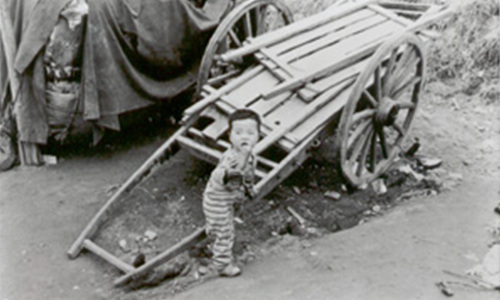
Diary of Yunbogi
Special Programs in Focus
Children · Family · Labor
- CountryJapan
- Production Year1965
- Running Time24min
- Format16mm
- ColorB&W
Program Note
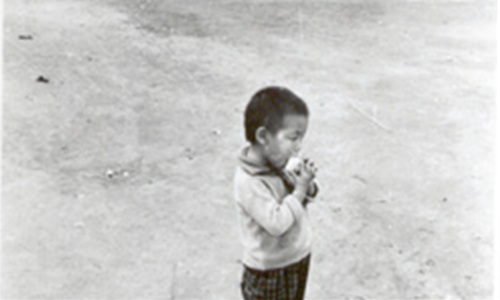
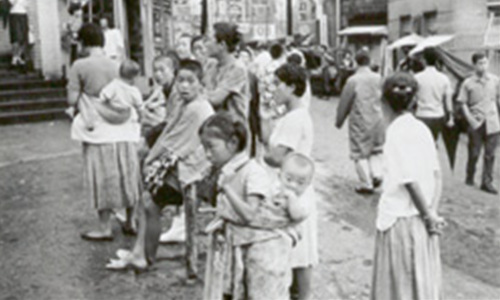
The images in Yunbogi′s Diary were shot by Oshima himself on his first visit to Korea in 1964. He was inspired to turn them into a film by the publication of a Japanese translation of the book which gives the film its title, the diary of a Korean street-boy. On the soundtrack, Oshima juxtaposes readings from the book with his own commentary, addressed to the boy himself - and, by extension, to all ′Yunbogis′ everywhere. Oshima sets out to make connections between Yunbogi′s work (selling papers and gum on the street to support his family) with both the liberation from Japanese colonial oppression and the overthrow of Rhee Seungman in 1960. Oshima: "At that time there were many children selling chewing gum to passing motorists, charging perhaps five won. They had doubtless bought the gum for three won. In a way they were begging, because they were charging two won more than the regular price. But they didn′t want to be seen as beggars. They wanted to do something, for pride. I was very impressed by them." (Tony Rayns)
Director
Nagisa Oshima
Born in Kyoto in 1932, he studied law at Kyoto University earning his degree in 1954.
He soon entered the Ofuna studios in Shochiku and for five years was assistant to
several directors including Hideo Oba. In 1959, he made his first feature Town of Love
and Hope. His next film Naked Youth and The Sun‘s Burial became the
standard-bearer of the Japanese New Wave. In 1960, he founded Sozosha, an
independent production company and made several independent films. In 1975, he made
controversial film In the Realm of the Senses, which won great admiration at the
Cannes.
Credit
- Director
Nagisa Oshima - ProducerNagisa Oshima
- ScreenplayNagisa Oshima
- Cinematographykawamata Takashi
- MusicNatio Takatoshi
- Production CompanyThe Japan Foundation
Yuko_Murata@jpf.go.jp
Photo